
Resources
Books and reflections on psychotherapy, psychoanalysis, grief, and the stories that shape a life.
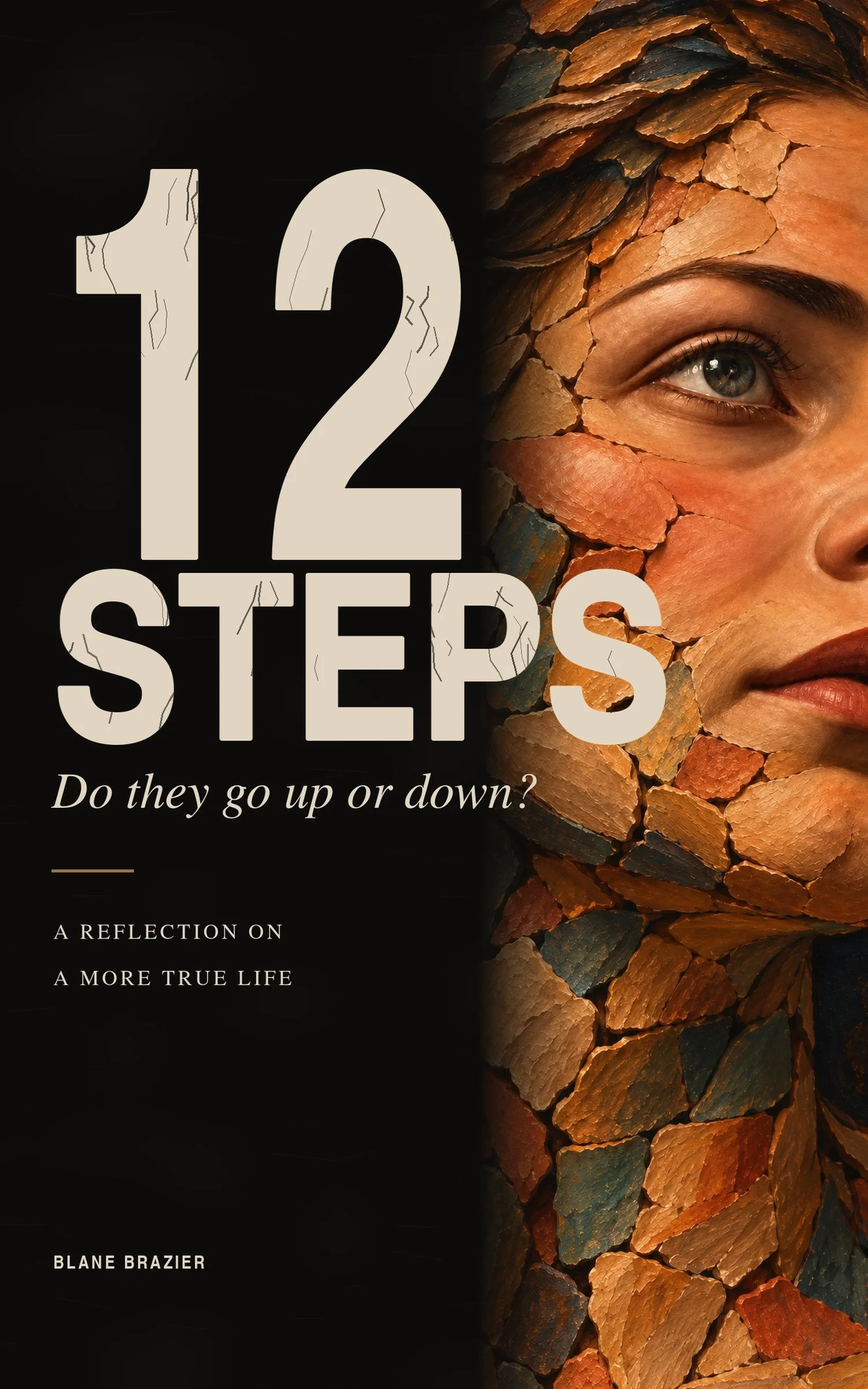
12 Steps: Do They Go Up or Down?
A reflection on a more true life.
What if the Twelve Steps are not a ladder toward becoming better, but a descent beneath the images we use to appear good? Drawing from Alcoholics Anonymous, psychoanalysis, and theological reflection, Blane Brazier explores recovery as the relinquishment of performance, righteousness, resentment, and the demand to be seen in a certain way.
Buy on AmazonFrom the blog
Read the latest posts below, or explore earlier entries through Older Posts.

The Mystery “Talking Cure” For Grief: a brief history
Freud’s warning about listening gives the talking cure its starting point: if the listener hears only what fits an expectation, the encounter may return only what is already known. His account of evenly suspended attention asks for a different kind of openness. (Freud, 1912)
In Mourning and Melancholia, Freud asks what happens when the loss of a loved person becomes an attack upon the self. Mourning concerns a loss in the world; melancholia involves a painful impoverishment of the ego. Self-reproach may carry a conflict within the lost relationship, including feelings that have become difficult to acknowledge. His use of melancholia is not interchangeable with a modern diagnosis. (Freud, 1917)
A bereaved person may speak of the one who died as entirely good while keeping all the badness of the relationship for themselves. I find this a useful question for mourning: what cannot be said when the image of the loved person must remain untouched? Continuing a bond is not itself the problem. The particular relationship, and its conflicts, matter.
Freud invited people to speak through free association, attending to the ways a story hesitates, repeats, or surprises its teller. Something can be forgotten without being gone. Stories of loss remain linked with stories of love, including wishes that were never fulfilled and disappointments that still seek an answer. (Freud, 1912; 1917)
Later grief care gave this listening new settings. Cicely Saunders’ idea of “total pain” made room for physical, psychological, social, and spiritual suffering. Elisabeth Kübler-Ross brought dying people’s voices into medical education. Their work reminds us that the sufferer has something to teach the listener. (St Christopher’s Hospice; Kübler-Ross, 1969)
Yet a story about grief can become another demand. What does it mean to rebuild oneself around a loss? Does the loss take over an identity? Does acceptance become a test of being a good mourner? When a relationship is remembered as all good or all bad, something of its complexity can disappear.
Melanie Klein’s account of mourning brings ambivalence into focus. Love and hate can concern the same person. The parent may not have been everything we hoped, or everything we feared. Mourning can involve revising our relationship to these internal figures, whether the people themselves are dead or alive. This is not an instruction to intensify depression; it is a way of thinking about mixed feelings that have little room in an idealized account of love. (Klein, 1940)
John Bowlby also approached mourning through beginnings as well as endings. A loss can disturb the bonds through which a person has felt secure. Mourners may reach into the past to anchor a sense of love and belonging, returning to familiar expectations when a new path feels unrecognizable. (Bowlby, 1980)
My interest is also in the image of who the mourner believes they must be: the loyal child, the selfless caregiver, the partner who never feels relief. A wish for a different life can then feel like a betrayal. Lacan’s attention to desire invites a question beyond recovering what was lost: what keeps this longing in motion, and whose recognition would an answer have to secure? (Lacan, 1964/1978)
Winnicott’s account of the false self opens a related question for me. Might the mourner also be missing from their own story, living through an image that leaves little room for creative originality? This is my application of his thinking to mourning, rather than a claim that every loss conceals the same difficulty. (Winnicott, 1965)
What if we do not grieve only endings, but also beginnings—the difficulty of allowing life to become different? Perhaps the same conflict keeps returning with another face. A talking cure offers room to hear more of that story, including the smallest detail or most contradictory feeling. The work may be less about becoming a better mourner and more about discovering a less punishing relationship to love, loss, and what remains possible.
Freud, S. (1912). Recommendations to Physicians Practising Psycho-Analysis. Standard Edition, 12, 109–120.
Freud, S. (1917). Mourning and Melancholia. Standard Edition, 14, 237–258.
St Christopher’s Hospice. The Voices That Shaped Us: The Work.
Kübler-Ross, E. (1969). On Death and Dying. Macmillan.
Klein, M. (1940). Mourning and its Relation to Manic-Depressive States. In Love, Guilt and Reparation and Other Works 1921–1945.
Bowlby, J. (1980). Attachment and Loss, Volume 3: Loss: Sadness and Depression. Basic Books.
Lacan, J. (1964/1978). The Four Fundamental Concepts of Psychoanalysis: Seminar XI, translated by Alan Sheridan. W. W. Norton.
Winnicott, D. W. (1965). Ego Distortion in Terms of True and False Self. In The Maturational Processes and the Facilitating Environment. Hogarth Press.

BORDERLINE: Abandonment, Projective Identification, and Parental Provocation
Vulnerability is the royal road to encounter our authenticity. Vulnerability can allow expressions of thought and feeling that a familiar role has made difficult to share. There are individuals in our midst who are committed to this sacred path of living authentically and have much to teach us, but instead of learning from them, we have often diagnosed them. Paradoxically, these individuals can feel lost and be hiding in identities that are not fully themselves, struggling with self-harming behaviors like addictions and eating disorders.
They may pass through inpatient and outpatient mental health services and encounter providers who experience their distress as manipulation, without sufficiently considering the relationship or the treatment setting. A person can become caught in an image of being ill, difficult, or dependent, while a treatment system inadvertently reinforces the role it hopes to change. This is a concern about how care is organized, rather than a conclusion about why a person relapses. So maybe our collective imagination needs to change so that the clinician's vulnerability shifts first and then their patient may follow.
Abandonment lies at the core of many individuals with BPD, as they often experience intense fear of being rejected or left alone. For some people, early experiences of separation or inconsistent care are important; a diagnosis does not establish a particular childhood history. These individuals may struggle to form stable and secure relationships, constantly seeking reassurance and validation. Unfortunately, the misuse of the BPD diagnosis often leads to further abandonment, as they are labeled as difficult or attention-seeking rather than understood and supported. This perpetuates a cycle of invalidation, reinforcing their fear of abandonment and making it more challenging to develop authentic connections. (National Institute of Mental Health)
The concept of projection is the idea that we project what we don’t like about ourselves onto the vulnerable other who has little power to defend themselves properly. Instead of using defenses like humor, deflection, and disavowal, the person may identify with who they are suggested to be to avoid shame and guilt and their personality transforms into the person they are not authentically. Projective identification is another theme that emerges in the context of BPD diagnosis.
As noted, projection is a defense mechanism that involves unconsciously projecting one's undesirable thoughts, feelings, or attributes onto others, often followed by a profound urge to control and manipulate them. While this behavior can be observed in individuals with BPD, it is important not to treat projective identification as a behavior unique to BPD or infer it from a diagnosis. Caregivers, and therapists, can also project onto the patient this idea of borderline and the patient or client identify with this message and begin acting out the behavior in the room with the clinician and thus enacting a vicious cycle of inauthenticity and further abandonment of the patient. (Klein, 1946)
Abusive provocation by caregivers is a third theme that contributes to the misuse of the BPD diagnosis. The individuals I have worked with who have BPD symptoms have often experienced deep trauma in their life in particular the provocation to perform by caregivers. The intelligent child is often provoked to argue and debate with the parent. The attractive child is often provoked to manage her modesty and remain thin and attractive. The entertaining child is often provoked to regulate and manage the ever-changing moods of their caregivers.
This trauma can result in difficulties regulating emotions and interpersonal relationships. However, the misuse of the BPD diagnosis can absolve caregivers of their responsibility, attributing all challenges faced by individuals to their supposed pathology. This perpetuates the cycle of abuse and denies individuals the opportunity to heal and reconnect with their authentic selves. Care should address the person’s history without assuming it in advance. The examples above invite questions about how a child’s role can become an internal image: intelligent, attractive, entertaining, or responsible for another person’s feelings.
Clinicians also need to consider their own responses and expectations, rather than place the whole difficulty within the person seeking help. A diagnosis should support care and leave room for a person beyond the label.
Klein, M. (1946). Notes on Some Schizoid Mechanisms. In Envy and Gratitude and Other Works 1946–1963.
National Institute of Mental Health. Borderline Personality Disorder.

HOME IS WHERE WE START FROM: The Interplay of Transitional Phenomena and Healthy Faith
Donald Winnicott introduced the concept of transitional phenomena in working through painful intrapsychic conflicts related to our primary object relationships which could apply to our relationship with God. These phenomena, initially explored in the context of child development, have significant implications for understanding the relationship between religion, specifically Christianity, and the human experience. Transitional phenomena, as conceptualized by Winnicott, refer to the transitional objects and spaces that facilitate the transition from an inner world to an outer reality. These intermediary aspects serve as a bridge between the self and the external world, connecting the evolving sense of self with the realm of spirituality in the context of Christianity. (Winnicott, 1971)
Winnicott’s concept of the transitional object, often exemplified by a child's attachment to a blanket or stuffed toy, corresponds to the individual’s need for a tangible object through which to dramatize their love and hate of a primary caregiver. Just as a child seeks security and destruction through their attachment to an object, Christians often seek a tangible connection to their faith to work through God protecting the faithful from an outside ‘other’ and God protecting the faithful from the ‘otherness’ within. In my reading of Christian narratives, the tension between home and a life beyond it becomes a way to consider both belonging and difference. This is my theological extension of Winnicott’s ideas, rather than his own account of Christian faith.
Beyond transitional objects and understanding that home is where we start from, Winnicott also emphasized the importance of transitional spaces, which are intermediate realms between subjective and objective reality. These spaces enable individuals to explore imagination, creativity, and the potential for spiritual growth. In the Christian context, such transitional spaces manifest in rituals, places of worship, and spiritual practices. Churches, for example, are transitional spaces where Christians can transcend their everyday concerns and connect with the divine.
Within these sacred spaces, they engage in communal rituals, prayer, and reflection, creating an environment that encourages spiritual growth, self-reflection, and the building of a relationship with God. One possibility is that the faithful’s destructive capacity is sublimated through a (de)constructive practice to rethink and reimagine what home could be out in the world away from the primary objects of our past. Such a (de)constructive practice engages with the conflicts of love whereby we acknowledge there was never an idyllic past, like Eden, to return to.
Rather, we are tasked with creating a world that has never existed before. One might say, it is a world after the death of God and the faithful become the transitional object they have been seeking, which is an encounter with the spirit of Christ in the act of loving itself.
Of course, this elevates the role of creativity and imagination as it teaches the mind to relate and even communicate in the realm of the symbolic which is so often the language of love and hate. Reflecting on the transitional experiences, such as engaging with transitional objects or spaces, can foster authentic faith and mature development. (Winnicott, 1971)
What is (modern) Psychoanalysis?
Psychoanalysis offers a way of understanding ourselves, our relationships, and how we conduct ourselves in the world. Often called the talking cure, it asks how we became who we are and why familiar ways of feeling and relating persist. The aim is to create room for changes that understanding alone has not yet made possible. (American Psychoanalytic Association)
Psychoanalysis is a type of therapy that focuses on examining a patient's unconscious mind to uncover hidden, missing, or forgotten emotions, thoughts, and memories that may be causing negative behaviors or emotions in their daily life. It was first introduced by Sigmund Freud in the late 19th century and has since evolved into various branches with different theories and techniques. Psychoanalysis sessions can involve the patient lying on a couch while the therapist sits behind them, letting the patient free-associate thoughts and emotions with room for the analyst to listen and respond.
This method allows the patient to explore their unconscious while noticing the expectations and social demands that shape what feels possible to say. However, psychoanalysis is often done face to face if the therapeutic relationship needs this form of object constancy. Contemporary psychoanalytic approaches differ in their emphasis on drives, sexuality, relationships, and the discovery of a more integrative, authentic identity through a profound therapeutic relationship. Dreams are discussed and defenses are analyzed but not merely to expose one’s vulnerability but to help you be an active participant in a healthier defensive style with the capacity to be intimate with secure attachments.
Psychoanalysis in its literal sense is ‘soul’ analysis. (Freud, 1912; McWilliams, 2011)
One of the major benefits of psychoanalysis is its ability to uncover deep-seated issues that may not be immediately obvious through other forms of therapy. By exploring the unconscious, a patient can gain insight into patterns or behaviors that may have developed from childhood experiences or traumatic events. This process can help patients gain a better understanding of why they behave the way they do and develop the skills to change those patterns. Another benefit of psychoanalysis is its focus on the therapeutic relationship between patient and therapist. The therapist's role is not just to listen and offer solutions but to serve as a guide in the patient's journey of self-discovery. This trusting relationship built over time can help patients develop greater emotional stability and self-awareness.
Psychoanalysis may not be the best fit for everyone. It requires a significant time commitment and can be a long and difficult process. However, it can be an effective treatment option for those struggling with severe anxiety, depression, personality disorders, and other complex mental health issues. In conclusion, psychoanalysis is a powerful form of therapy that can help people explore their unconscious mind and gain insight into complex mental health issues. If you're considering psychoanalysis as a treatment option, it's important to understand the commitment involved and what the journey entails. Many training centers like the Dallas Psychoanalytic Center offer analysis at a reduced fee if you wish to start this journey.
In my work, this also means attending to the images of who you believe you must be. The capable person, the good child, or the selfless partner may hold something important while making other wishes difficult to acknowledge. These are questions to explore through your own words, rather than a new ideal to live up to.
American Psychoanalytic Association. What Is Psychoanalytic or Psychodynamic Psychotherapy?
Freud, S. (1912). Recommendations to Physicians Practising Psycho-Analysis. Standard Edition, 12, 109–120.
Freud, S. (1914). On Narcissism: An Introduction. Standard Edition, 14, 67–102.

The Transformative Journey of Psychodynamic Therapy: From Sickness to Well-being
Psychodynamic therapy, a dynamic and evolving form of psychotherapy, has long been recognized for its ability to guide individuals through an exploration of their innermost selves. Initially focusing on the concern of what it means to be sick and meeting diagnostic criteria, psychodynamic therapy gradually shifts towards the desire to understand what it truly means to be well. Here I consider the transformative nature of long-term psychodynamic therapy, exploring how it facilitates the establishment of new relationships with dreams, love, gender, sexuality, and, most importantly, desire.
Psychodynamic therapy frequently begins with an individual seeking help due to a sense of emotional distress or the presence of symptoms. The therapist and client collaboratively work towards understanding the manifestations of their distress, letting the patient guide the therapist into their suffering. This initial phase focuses on holding space for the individual's pain, providing what Donald Winnicott called a holding environment for the conflicts in the patients life exploring this present state un-wellness. (Winnicott, 1965)
As the therapeutic journey unfolds, the focus of psychodynamic therapy undergoes a profound shift from sickness to well-being. The therapist encourages the client to delve deeper, beyond the symptoms, towards the roots of their distress. Through self-reflection, clients gain insight into the underlying psychological processes that contribute to their emotional challenges and often a patient is constructing an identity based on what they feel they should be. Even the founder of modern talk therapy, Sigmund Freud, questioned wellness to the degree it appeared to drive him to write a few books on topics like dreams, civilization, and even an idyllic figure from his childhood - the Jewish patriarch, Moses. Sometimes we discover ideals are the root of our ills. (Freud, 1914)
As psychoanalysis developed, different traditions gave new attention to the ideals carried within relationships. Love, gender, sexuality, and desire became ways to explore how the social world is lived personally. Long-term psychodynamic therapy offers a unique space for clients to establish new relationships with various aspects of their lives. One such aspect is the exploration of dreams. Dreams serve as a gateway to the unconscious mind, providing valuable insights into repressed desires, fears, and unresolved conflicts. The therapist assists the client in exploring the associations a dream brings to mind, facilitating a deeper understanding of their inner world. (Freud, 1900)
Love, a fundamental human experience, also takes center stage in the therapeutic process. Psychodynamic therapy allows clients to explore their past and present relationships, understand attachment patterns, and work towards cultivating healthier connections. By uncovering unresolved conflicts stemming from early life experiences, individuals can develop more fulfilling and meaningful relationships.
Similarly, psychodynamic therapy invites an exploration of the complex nature of gender and sexuality. Clients are provided with a safe space to examine and challenge societal norms and expectations surrounding these topics, enabling a deeper understanding of their own identities and desires.
Winnicott, D. W. (1965). The Maturational Processes and the Facilitating Environment. Hogarth Press.
Freud, S. (1914). On Narcissism: An Introduction. Standard Edition, 14, 67–102.
Freud, S. (1900). The Interpretation of Dreams. Standard Edition, 4–5.
American Psychoanalytic Association. What Is Psychoanalytic or Psychodynamic Psychotherapy?

Dreams: Memory, Conflict, and Affect
Memory is a fascinating aspect of human cognition. It allows us to store, retrieve, and process information from our past experiences. However, memory is not just a mere recorder of events; it is intertwined with our emotions and conflicts. Here I consider the complex relationship between memory, conflict, and feelings. Furthermore, we will explore the intriguing concept of our unconscious mind repeating trauma from our past in an attempt to somehow master it.
Memory is the cornerstone of our identity, shaping our perception of the world and influencing our decisions. Memories are stored in different forms within our brains, such as episodic, semantic, and procedural memories. Episodic memories are autobiographical and include specific details about our personal experiences, while semantic memories are facts and general knowledge. Procedural memories govern the skills we acquire over time. Together, these memories form the framework upon which we navigate life. When conflict arises, our memories play a pivotal role in shaping our perceptions.
Conflict can arise in various forms, such as interpersonal disputes, inner turmoil, or even cognitive dissonance. Our memories, particularly the emotional aspects intertwined with them, can influence how we perceive and interpret conflicts. For example, a person who experienced betrayal in a past relationship might be more skeptical and guarded in future relationships, leading to conflicts when trust is challenged. Similarly, a person who faced financial struggles in the past might develop a fear of financial instability, leading to conflicts around money management. The intertwining of memory and conflict gives birth to a rich array of feelings.
Emotions color our experiences and provide a subjective lens through which we interpret events. The emotions associated with specific memories can vary greatly, ranging from joy and love to fear and anger. These emotional imprints can shape our response to conflicts, sometimes leading to heightened reactivity or the avoidance of certain situations altogether. Our feelings can become intertwined with the conflict at hand, creating a complex web of emotions that need to be navigated.
Freud described a tendency to repeat distressing experiences in his account of repetition compulsion. He explored whether repetition could involve an attempt at mastery, while also recognizing repetitions that resist a simple explanation. This is a psychoanalytic way of asking about experience, rather than a universal account of why trauma recurs. (Freud, 1920)
Dreams can bring memory, conflict, and affect into the same scene. A familiar place or person may appear in an unexpected role, allowing associations that have been difficult to formulate in waking life. The meaning is not supplied by a dream dictionary; it develops through the dreamer’s words. (Freud, 1900)
Exploring a dream can offer clues about unresolved issues or emotions from waking life. Dreams may illuminate a dilemma, intensify a feeling, or interrupt the familiar image of who you are. Listening to those details offers a way to approach what has been felt but not yet become thinkable. (Stern, 1997)
Freud, S. (1920). Beyond the Pleasure Principle. Standard Edition, 18, 1–64.
Freud, S. (1900). The Interpretation of Dreams. Standard Edition, 4–5.

THE IMAGINARY, SYMBOLIC, AND THE REAL
CBT often works with relationships among thoughts, feelings, and behavior, while DBT includes skills for managing intense emotion and relationships. These approaches vary in practice and can also consider personal history. Psychodynamic work focuses on specific behavior and very specific distressing and dysregulated emotions also, but not as a phenomenon arising out of the individual. Thoughts and feelings are profoundly impacted by the social world one inhabits and internalizes in early developmental years of life through not only how we acquire language but how language seems to acquire us by possessing us with desires which may not be our own yet give shape to the characters we play in the grand narrative of life.
Psychodynamic work takes a harder look at deeper (often older) processes whereby it explores the imaginary, symbolic and the real of what feels lacking in love. Lacan’s imaginary concerns images and identifications; the symbolic concerns language and the positions it gives us; the real names what resists being fully contained by those images and explanations. These distinctions give a language to the gap between the person we feel we ought to be and the experience that will not fit. (Lacan, 1949/2006; 1964/1978)
Psychodynamic therapy delves deep into the unconscious mind, aiming to bring underlying, unresolved conflicts and traumas to the surface. Alongside attention to symptoms, psychodynamic work seeks to identify and understand the root causes of emotional distress and psychological difficulties. This in-depth exploration allows clients to gain insight into their motivations, behaviors, and patterns of thinking that may stem from early childhood experiences. By addressing these underlying issues, psychodynamic therapy lays the foundation for lasting transformation and healing.
Another distinctive advantage of psychodynamic therapy lies in the emphasis placed on the therapeutic relationship. Psychodynamic work offers a safe and supportive environment where individuals can freely express their thoughts, feelings, and concerns without fear of judgment. Through this process, a strong and trusting relationship forms with the therapist, enabling clients to explore their emotions and vulnerabilities at a deeper level. This authentic connection often becomes a catalyst for profound personal growth and self-discovery, fostering lasting positive changes in one's life.
Psychodynamic therapy takes a more holistic approach to growth and development. By addressing the underlying emotional conflicts and unconscious processes that impact our lives, psychodynamic work facilitates a profound transformation in various areas, including relationships, self-esteem, and overall well-being. Moreover, psychodynamic therapy recognizes the significance of the unconscious mind and the intricate interplay between past experiences and present difficulties. By tapping into these unconscious dynamics, individuals can achieve profound self-awareness and make lasting changes that extend far beyond mere symptom reduction. For me, this gives psychotherapy a poetic dimension: the words and images through which a life is lived can begin to carry meanings that were previously difficult to recognize.
Lacan, J. (1949/2006). The Mirror Stage as Formative of the I Function. In Écrits, translated by Bruce Fink. W. W. Norton.
Lacan, J. (1964/1978). The Four Fundamental Concepts of Psychoanalysis: Seminar XI, translated by Alan Sheridan. W. W. Norton.
American Psychoanalytic Association. What Is Psychoanalytic or Psychodynamic Psychotherapy?

Freud’s Pastor
Oskar Pfister's relationship with Sigmund Freud was an intriguing and complex one, characterized by both admiration and disagreement. Pfister, a Swiss pastor became fascinated with Freud's groundbreaking theories on the human mind and subconscious. Their interactions and correspondence, which spanned the course of 30 years, shaped the early development of psychoanalytic theory and its integration with religious beliefs.
In the book Psychoanalysis and Faith, which is a compilation of the correspondence between Freud and Pfister, we get a glimpse of how faith was a part of psychoanalysis. Freud writes to Pastor Pfister:
In itself psycho-analysis is neither religious nor non-religious, but an impartial tool which both priest and layman can use in the service of the sufferer. I am very much struck by the fact that it never occurred to me how extraordinarily helpful the psycho-analytic method might be in pastoral work, but that is surely accounted for by the remoteness from me, as a wicked pagan, of the whole system of ideas. (Freud & Pfister, 1963)
While grieving his daughter Sophie’s death from influenza pneumonia in January 1920, Freud wrote to Pfister about the sudden loss and the family’s inability to reach Hamburg in time. The letter gives a more personal view of the man whose theories of mourning are so often discussed in abstraction. (Freud & Pfister, 1963; Freud Museum, Freud and Pandemic)
Despite their mutual respect, however, Pfister and Freud had fundamental disagreements. One significant point of contention was religion itself. Freud, famously known for his views on religion as wish fulfillment and illusion, found it challenging to grasp Pfister's commitment to both psychoanalysis and Christianity. In turn, Pfister believed that religion had a valid place in understanding the human psyche and emphasized the importance of spiritual experiences.
Their differing perspectives included the role of sexuality, repression, and religious experience. Freud’s critique of religion as illusion did not prevent a sustained exchange with a pastor who valued psychoanalysis. Their correspondence allows disagreement to remain part of a relationship rather than its end. (Freud & Pfister, 1963)
Despite these differences, Pfister remained dedicated to Freud's groundbreaking theories. He saw the value in Freud's approach to psychoanalysis and the therapeutic benefits it could bring to individuals suffering from mental health issues. Additionally, Pfister admired Freud's pioneering efforts in challenging societal taboos and stigmas surrounding mental health, paving the way for a more open discourse on psychological well-being.
Their relationship extended beyond a merely professional exchange. For my work, its value is the room it leaves for faith, doubt, affection, and disagreement. A religious image may provide comfort while also carrying an expectation of who a person must be to deserve love. Therapy can make room for that tension without deciding the truth of a belief in advance.

Understanding the Differences Between Family Based Systems and Emotion-Focused Family Therapy
When it comes to family therapy, there are different schools of thought. Two approaches people encounter are family-based systems therapy and emotion-focused family therapy. Both approaches have their own unique strengths and weaknesses. In this article, we will discuss the differences between these two methods and why one might be a better fit for your needs.
Family-based systems therapy is a type of therapy that helps families to identify and change the patterns of behavior that contribute to their problems. This approach is based on the idea that individual problems are not just the result of personal flaws, and may be better understood in the context of relationships and patterns within the family. A systems perspective does not require every family member to attend every session.
Therapists who use this approach will work with the entire family to identify common issues, learn effective communication techniques, and develop conflict resolution skills. The aim is to help families understand and address issues that are contributing to the problem so that they can move forward and recover. (Bowen Center)
Emotion-focused family therapy is a type of therapy that focuses on the emotional experience of family members. This approach recognizes that emotional trauma can be passed down from generation to generation, and that family members may have unresolved emotions that are contributing to their problems.
Therapists who utilize this approach will work with families to help them understand how emotions are impacting their behavior and relationships with each other. This is done by creating a safe space where family members can express their emotions freely. The aim is to help families work through their emotional challenges and create a stronger bond amongst themselves. (Lafrance, Henderson, & Mayman, 2020)
The main difference between family-based systems therapy and emotion-focused family therapy is their focus. Family-based systems therapy focuses on the patterns of behavior that contribute to the problem, while emotion-focused family therapy focuses on the emotional experience of family members.
However, both approaches recognize the importance of addressing issues within the context of the entire family and considering how an individual’s difficulties relate to family relationships. Additionally, both approaches believe in creating a safe space where family members can come together and work towards healing.
When considering family therapy, it's important to choose an approach that will be most effective for your unique circumstances. If your family is struggling with communication and conflict resolution, family-based systems therapy may be the right choice. However, if emotional issues are more of an issue emotion-focused family therapy may meet your needs more efficiently.
My own interest is also in how family roles become images a person carries within: the reliable one, the problem, the person who must not need anything. Those expectations can be explored in individual therapy, including when other family members are not involved.
The Bowen Center for the Study of the Family. Introduction to the Eight Concepts.

Love, Work, and Play
Therapy is a powerful tool for achieving personal growth and improving the quality of life. The primary goal of therapy is to help people gain a better understanding of themselves and their relationships with others. Three areas I return to in therapy are to improve relationships with love, work, and play. Each of these areas plays a critical role in our lives, and when they are in balance, we are more likely to feel fulfilled and content.
Love is an essential part of human connection. Whether it be between friends, family, or a romantic partner, healthy relationships bring a sense of joy, comfort, and security and are essential for emotional well-being. Unfortunately, when relationships are not functioning correctly, they can lead to feelings of sadness, anxiety, and loneliness. Therapy helps people identify and address unhealthy patterns in relationships, providing the tools and support needed to communicate effectively and create more meaningful connections. This can also mean becoming more able to bear uncomfortable feelings, including anger and hate, without treating them as proof that love has disappeared. (Klein, 1940)
Work takes up a significant portion of our lives and our identity, and it's crucial that we have a healthy relationship with it. When we experience work-related problems such as stress, burnout, and dissatisfaction, they can quickly spill over into other areas of our lives. A therapist can help individuals explore and identify underlying issues, set boundaries, and develop healthy coping skills to address work-related stress.
In a highly meritocratic society, people often prioritize work over leisure and forget the importance of play and leisure time. Engaging in mindfulness and leisure activities can reduce stress, increase creativity, and establish positive daily routines that promote mental and emotional well-being. Therapy can help individuals identify and incorporate more enjoyable, fulfilling activities into their daily lives to promote self-care, balance, and overall well-being. Play also promotes creativity and challenges cognitive rigidity in problem solving. (Winnicott, 1971)
Love, work, and play each offer a way to think about the life a person is able to inhabit. Each area contributes to our overall sense of well-being, and when these areas are not balanced, emotional and mental health can suffer. Therapy can help individuals gain the tools, insights, and strategies needed to create more fulfilling relationships, establish healthy boundaries, and promote self-care and daily routines that nourish their minds and bodies. With these tools and support, individuals can achieve optimal mental and emotional well-being and live a fulfilling and satisfied life. At Lost Stories, therapy itself is an experience of these three values whereas it is an encounter with love as work and character growth which happens through play.
Klein, M. (1940). Mourning and its Relation to Manic-Depressive States. In Love, Guilt and Reparation and Other Works 1921–1945.

Becoming A Secure Base
Emotional co-regulation is the process by which two people can work together to regulate their emotional states. The idea is that one person's emotional state can influence the other person's emotional state, and through communication and empathy, they can work together to regulate their emotional experiences. This process is especially important in intimate relationships, where individuals are often heavily intertwined with each other's emotional states.
Effective emotional co-regulation requires attentive listening and a willingness to understand the other person’s experience. It involves being present with the other person, understanding their perspective, and creating a safe space for them to express themselves. This process can help reduce conflict and increase feelings of trust and security within the relationship. By co-regulating emotions, individuals can also learn new coping strategies and resilience skills that can be applied to future situations.
While emotional co-regulation can be challenging, it is an important aspect of building healthy relationships. With practice and open communication, individuals can create a secure base from which to explore their own emotions and support each other through difficult times. Whether it's through verbal communication or nonverbal cues, the ability to co-regulate emotions can be a powerful tool for developing intimacy, deepening connections, and building resilience in relationships. (Bowlby, 1988)
In therapy, feeling secure also needs to include room for disagreement, limits, and ambivalence. The image of the perfectly reassuring other can itself become a demand. A dependable relationship allows those expectations to become thinkable, including when reassurance does not seem to reach the difficulty.
Bowlby, J. (1988). A Secure Base: Parent-Child Attachment and Healthy Human Development. Basic Books.

A Backpack Full Of Rocks
Are you a caregiver for an elderly parent? Are you a caregiver for a developmentally delayed child? Are you a caregiver for someone struggling with an addiction to substances or an eating disorder?
Imagine you are on a beautiful hike with your loved one through the mountains, each of you with their own backpack full of rocks. You reach a large hill and your loved one can no longer carry their load of rocks. As a good caregiver you take their rocks (guilt, shame, self-blame, disappointments, resentments, etc.) and put them in your backpack. Now you have a backpack full of rocks and you realize, why am I trying to be the hero? Maybe I need someone to help me carry my rocks and what if we let some of our rocks go?
As a caregiver, it can be easy to become so focused on caring for your loved one that you forget to care for yourself. However, neglecting your own needs and wellbeing can actually be detrimental to both you and the person you're caring for. That's why self care is essential for caregivers.
Caregiving can be physically and emotionally draining. If you don't take time to rest and recharge, you might find yourself feeling exhausted, frustrated, and overwhelmed. This can lead to burnout, a state of chronic stress and exhaustion that can make it difficult to continue providing quality care.
By engaging in self care activities like getting enough sleep, exercising, and taking breaks throughout the day, you may help reduce stress and preserve energy for the important work you do.
When you're providing constant care for someone else, it can be easy to let your own health take a backseat. But neglecting your physical health can have serious consequences, both for you and for your loved one.
Taking care of your body by eating well, exercising regularly, and attending to any health concerns you might have can help you feel better physically and reduce your risk of developing health problems down the line. Additionally, by modeling healthy behaviors for your loved one, you can encourage them to make healthier choices as well. (National Institute on Aging)
Caregiving can be incredibly stressful, and it's not uncommon for caregivers to experience feelings of anxiety, depression, or other mental health challenges. Engaging in self care activities like journaling, meditation, or therapy can help you manage your stress levels and prioritize your mental health.
Taking care of yourself is absolutely essential for anyone working as a caregiver. By prioritizing your own physical, emotional, and mental wellbeing, you can provide better care for the person you love and avoid burnout and other negative consequences.
There is also the question of who you feel you must be to remain loving. If setting down a rock feels like proof that you are selfish, practical advice may not be enough. Therapy offers space to explore the guilt, resentment, and wish to be needed that can make a boundary so difficult.
National Institute on Aging. Taking Care of Yourself: Tips for Caregivers.

What is complicated grief?
It all begins with an idea.
Complicated grief is a condition in which an individual experiences intense and long-lasting bereavement symptoms. The grief is complicated when the emotions and behaviors related to the loss are prolonged, intense, and difficult to manage. Individuals with complicated grief may feel trapped in their grief, unable to move forward or find joy in life. They may experience feelings of meaninglessness, bitterness, and despair, and may have difficulty adjusting to life without their loved one. Complicated grief can have severe effects on an individual's physical and mental health, and it is essential to seek support and treatment if you are struggling with this condition. At Lost Stories, we offer therapy and support groups for individuals navigating the complexities of grief. The term overlaps with what is now diagnosed as prolonged grief disorder, although a diagnosis requires an individual assessment.
Prolonged grief disorder (PGD) describes persistent, disabling grief after a death. Intense yearning or preoccupation with the deceased may be accompanied by loneliness, disbelief, emotional numbness, a disruption of identity, or difficulty returning to daily activities. In DSM-5-TR, the death must have occurred at least twelve months earlier for adults, or six months earlier for children and adolescents. Additional criteria and social, cultural, and religious context matter; the passage of time alone does not establish a diagnosis. (American Psychiatric Association)
Alongside assessment, I am interested in the particular relationship that remains in memory and imagination. Love, disappointment, relief, and guilt can coexist. Giving these feelings room may make mourning less governed by an image of how you ought to grieve.
American Psychiatric Association. Prolonged Grief Disorder.
Klein, M. (1940). Mourning and its Relation to Manic-Depressive States. In Love, Guilt and Reparation and Other Works 1921–1945.

Eating Disorders and Depression
It all begins with an idea.
When we think about eating disorders, the first thing that comes to mind is probably anxiety. It is undoubtedly true that eating disorders are often related to anxiety, as individuals may feel anxious and stressed about their weight, body shape, and food intake. However, what many people fail to recognize is that eating disorders are also closely related to depression and depressive symptoms.
To begin with, many individuals with eating disorders struggle with feelings of sadness, hopelessness, and low self-esteem. They may feel that they are not good enough or that they do not have control over their lives, leading to feelings of helplessness and despair. These feelings are commonly associated with depression and can significantly impact an individual's mental health and well-being.
Furthermore, eating disorders can also lead to physical symptoms that are associated with depression, such as fatigue, sleep disturbances, and difficulty concentrating. These symptoms can further exacerbate feelings of sadness, hopelessness, and low self-esteem, contributing to the cycle of depression and disordered eating.
Eating disorders are complex conditions with biological, psychological, and social influences. Co-occurring depression and anxiety should be assessed and treated as part of the care plan; a single neurotransmitter explanation cannot account for an individual’s experience. (National Institute of Mental Health)
In conclusion, although eating disorders are frequently associated with anxiety, it is essential to recognize that they are closely related to depression as well. Individuals with eating disorders often experience feelings of sadness, hopelessness, and low self-esteem, as well as physical symptoms that are associated with depression. Given the significant impact that eating disorders and depression can have on an individual's mental and physical health, it is crucial that we consider both anxiety and depression when treating these complex conditions.
Alongside this care, I am interested in the standards by which a person judges themselves. Food, appetite, or body shape may become entangled with an image of being controlled, desirable, or good enough. These meanings develop through a person’s own associations; they cannot be assumed from a symptom.
National Institute of Mental Health. Eating Disorders: What You Need to Know.

Men with Eating Disorders
Eating disorders are often associated with women, but men can also struggle with these disorders.
The National Eating Disorders Association notes that roughly one in three people struggling with an eating disorder is male. Estimates vary with the population and condition studied, and stereotypes can delay recognition. (National Eating Disorders Association)
There are many reasons why men develop eating disorders. Like women, they may feel pressure to conform to cultural ideals of beauty and thinness. They may also use food or exercise as a way to cope with stress or difficult emotions. In addition, men who participate in sports or bodybuilding may feel pressure to maintain a certain weight or body composition.
Men can experience the same eating disorders as women, while concerns about muscularity, leanness, or performance may make the difficulty less recognizable. Excessive exercise, fasting, or rigid food rules should not be dismissed simply because they appear to fit a cultural image of discipline. (National Eating Disorders Association)
It is important for men to understand that eating disorders are not a sign of weakness or failure. It takes strength and courage to reach out for help. Treatment for eating disorders typically involves a combination of therapy, nutrition psychotherapy, and medication as needed.
At Lost Stories, we provide a safe and confidential space for men to explore and heal from their eating disorders. We believe that recovery from an eating disorder is possible and we are committed to supporting our clients throughout their journey.
Psychotherapy can also explore what being strong or desirable seems to promise. Whose recognition matters, and what feels at risk in being seen as needing help? These questions belong alongside medical and nutritional care.
National Eating Disorders Association. Eating Disorders in Men and Boys.
National Institute of Mental Health. Eating Disorders: What You Need to Know.

5 Faces of an Eating Disorder
Eating disorders are complex mental health conditions that involve significant disturbances in eating and can have serious physical and emotional consequences. Not every eating disorder involves a wish to change body weight or shape. There are several types of eating disorders, each with their own unique symptoms and behaviors.
Anorexia Nervosa: This eating disorder is characterized by an intense fear of gaining weight and a distorted body image. People with anorexia may restrict their food intake to the point of starvation, exercise excessively, and have a preoccupation with their weight and body shape. They may also engage in purging behaviors such as vomiting or using laxatives.
Bulimia Nervosa: People with bulimia engage in recurrent episodes of binge eating, followed by purging behaviors such as vomiting or using laxatives. They may also engage in extreme exercise or fasting to compensate for their binge eating. Like anorexia, people with bulimia have a distorted body image and are preoccupied with their weight and body shape.
Binge Eating Disorder: People with binge eating disorder regularly consume large amounts of food in a short period of time, often feeling out of control during these episodes. Unlike bulimia, binge eating is not regularly followed by compensatory behaviors. The distress and health consequences deserve attention at any body size.
Avoidant/Restrictive Food Intake Disorder (ARFID): This involves restricting the amount or variety of food because of sensory experience, fear of consequences such as choking, or low interest in eating. It can cause nutritional deficiencies and other health difficulties, and is not driven by the weight or shape concerns characteristic of anorexia.
Other Specified Feeding or Eating Disorder (OSFED): OSFED is a category for individuals who display disordered eating behaviors, but do not meet the full criteria for any of the other eating disorders. This can include subthreshold anorexia or bulimia, as well as purging disorder, where individuals regularly engage in purging behaviors without binge eating. (American Psychiatric Association)
It is important to seek professional help if you believe that you or someone you know may be struggling with an eating disorder. Early intervention and treatment can greatly improve the likelihood of recovery.
These descriptions help guide assessment, but they do not tell the whole story. In my work, the person’s associations to food, care, desire, and bodily experience matter alongside the diagnosis and appropriate medical and nutritional treatment.
American Psychiatric Association. What Are Eating Disorders?
National Institute of Mental Health. Eating Disorders: What You Need to Know.

Pros/Cons of CBT and Psychodynamic Psychotherapy
Pros/Cons of CBT and Psychodynamic Psychotherapy
Cognitive behavioral therapy often offers a structured, relatively brief approach focused on specific difficulties. It teaches practical skills for working with thoughts and feelings, setting goals, tracking progress, and developing coping strategies. It has an established evidence base, though duration and cost depend on the person’s needs and the treatment offered.
For some people, a strong emphasis on changing thoughts and behavior can feel jarring or leave a wish for more exploration of underlying conflicts. CBT also asks for active participation and may include work outside sessions. These are questions of fit to discuss with a therapist, rather than inevitable limitations of the approach.
Psychodynamic psychotherapy emphasizes unconscious patterns and unresolved conflicts, helping people explore emotions and experiences and make connections between past relationships and present life. The relationship with the therapist becomes part of that inquiry. (American Psychoanalytic Association)
More frequent or longer-term sessions can increase the overall cost. Exploration may feel repetitive or recursive rather than like a linear path forward, and someone needing immediate practical help may also need a more focused intervention. It is useful to discuss goals and how you will recognize change, even when the work remains open-ended.
At Lost Stories, my interest is in the images and expectations that keep a difficulty repeating. The choice of treatment should make room for your needs, previous experience, and what you hope might become possible.
American Psychoanalytic Association. What Is Psychoanalytic or Psychodynamic Psychotherapy?

Disordered Eating and the Role of Character Development
Nancy McWilliams’ work on psychoanalytic diagnosis considers how personality structure shapes a person’s emotional life, relationships, and response to treatment. Her emphasis is on understanding a particular person rather than reducing them to a symptom or label. (McWilliams, 2011)
Applied to eating difficulties, this perspective invites attention to how food, control, and the body become ways of communicating or managing distress. It does not mean that an eating disorder proves “damaged character” or is caused by a caregiver’s failure. Biological, psychological, and social influences all matter. This application is my clinical extension of McWilliams’ broader approach.
Psychotherapy can be an important part of eating-disorder care. Psychoanalytic therapy, in particular, can be helpful in addressing the deeper emotional issues that are that may accompany eating difficulties. Through therapy, patients can learn to identify and regulate their emotions in healthier ways, gaining a greater sense of control over their lives and their eating habits.
McWilliams’ attention to the individual suggests that treatment approaches should be tailored to the individual needs of each patient. This means taking into account factors such as past experiences, family dynamics, and personal beliefs about food and body image. By understanding these factors, therapists can develop treatment plans that are more effective and more likely to lead to lasting recovery.
Understanding past experiences, family dynamics, and beliefs about food and body image can help make treatment more particular. An image of being undemanding, disciplined, or perfectly in control may become available to thought. This inquiry belongs alongside medical assessment and nutritional support, rather than replacing them.
National Institute of Mental Health. Eating Disorders: What You Need to Know.

Grief and Eating Disorders: The Dangerous Connection
It all begins with an idea.
Losing a loved one can be one of the most challenging experiences one can face. With that loss, comes a tremendous amount of pain and suffering that can result in physical and emotional consequences, including changes in appetite and eating. An eating disorder may also occur alongside grief, and concerning symptoms deserve assessment rather than an assumption that they will resolve on their own.
It is no surprise that grief and loss can trigger feelings of anxiety, depression, sadness, and even anger. These powerful emotions are what make grief so challenging to navigate. These emotions can also trigger significant changes in one's eating habits, which sometimes become concerning or persist.
For some people, grief and eating difficulties become entangled with a wish for stability after a loss. This is a clinical possibility to explore, rather than a single explanation for an eating disorder. During the grieving process, individuals may feel a sense of helplessness and loss of control. They may turn to food as a way of regaining control over their lives, causing physical harm to themselves in the process. Sometimes food or its refusal acquires a symbolic resonance with what has felt lacking in a lost relationship. That meaning must emerge from the person’s own experience rather than be assigned from outside.
Recognizing the warning signs of an eating disorder triggered by grief is essential. This is a highly complex mental health issue that requires careful observation and understanding. But, grief and eating disorder behaviors can be closely linked, as not all coping skills are healthy or adaptive. For example, a common method of coping for grieving individuals is through food, whether that involves binge eating episodes or restricting food intake, and exercise, which may include compulsively working out. And while they may provide some temporary relief from unwanted emotions, like depression or sadness, these coping skills can ultimately lead to many problems. Not to mention depression and eating habit changes, such as emotional eating or even night eating, can complicate your health, leading to disordered eating behaviors.
Some of the common signs of an eating disorder include a sudden change in weight, avoiding social events that involve food, skipping meals, excessive exercise, using substances to suppress appetite, and the development of a negative body image.
Eating disorders occurring alongside grief are dangerous and can result in an array of medical problems. From malnourishment to organ failure, the consequences of this condition can be severe and life-threatening.
Anyone who has experienced a loss and notices concerning eating behaviors should seek an assessment. Care may need to include medical monitoring, nutritional support, and psychotherapy that can make room for the loss and the person’s relationship to food and the body. (National Institute of Mental Health)
Eating disorders can have lasting and permanent impacts on one's physical and emotional health. A proactive approach to recognizing the warning signs, educating others and seeking professional treatment is essential in addressing this issue. As a community, we must work toward recognizing the danger of eating difficulties alongside grief and provide support to those in need.
National Institute of Mental Health. Eating Disorders: What You Need to Know.

How Therapy Is The Best Editor of an Authentic Story
Robert Neimeyer is a renowned psychologist and scholar who has made seminal contributions to the field of grief therapy. One of his key concepts is "meaning reconstruction," which refers to the process by which individuals make sense of their experiences in the wake of loss.
Neimeyer’s meaning-reconstruction work invites attention to how loss affects a person’s understanding of events, identity, and purpose. Several questions can help open that inquiry. (Neimeyer, 2019)
Making sense of the loss involves acknowledging the reality of the loss and understanding its implications for one's life. It may also involve grappling with complex emotions such as guilt, anger, and regret.
Revising one’s sense of self matters because loss often disrupts our sense of who we are and our place in the world. Meaning reconstruction involves reevaluating our self-concept in light of the loss and revising it as necessary.
Rebuilding a sense of purpose can be difficult because loss can challenge our sense of meaning and purpose in life. Meaning reconstruction involves finding new sources of meaning, whether that be through personal growth, spiritual exploration, or other means.
Neimeyer's work on meaning reconstruction has had a profound impact on the field of grief therapy, providing a framework for clinicians to help individuals navigate the complex and often overwhelming experience of loss. His approach emphasizes the importance of integrating loss into one's life story in a way that promotes resilience and growth rather than despair and stagnation.
At Lost Stories, we are committed to helping individuals find meaning and healing in the aftermath of loss. We draw on Neimeyer's insights and other psychoanalytic perspectives to provide compassionate, evidence-based support to our clients. Whether you are struggling with the loss of a loved one, a job, or another significant aspect of your life, we are here to help you find your way forward.
I also want to leave room for what does not yet make a coherent story. The good child, the strong partner, or the loyal mourner may be an image that makes some feelings easier to tell than others. An authentic account can remain unfinished as more of the experience becomes thinkable. (Stern, 1997)